How CRM Software Can Help Businesses Manage Customers Better
How CRM Software Can Help Businesses Manage Customers Better
In today's competitive business environment, managing customer relationships effectively is essential for long-term success. Customers expect quick responses, personalized communication, and reliable service. When a business manages customer information through spreadsheets, notebooks, or scattered messages, important details and sales opportunities can easily be missed. This is where CRM software becomes valuable.
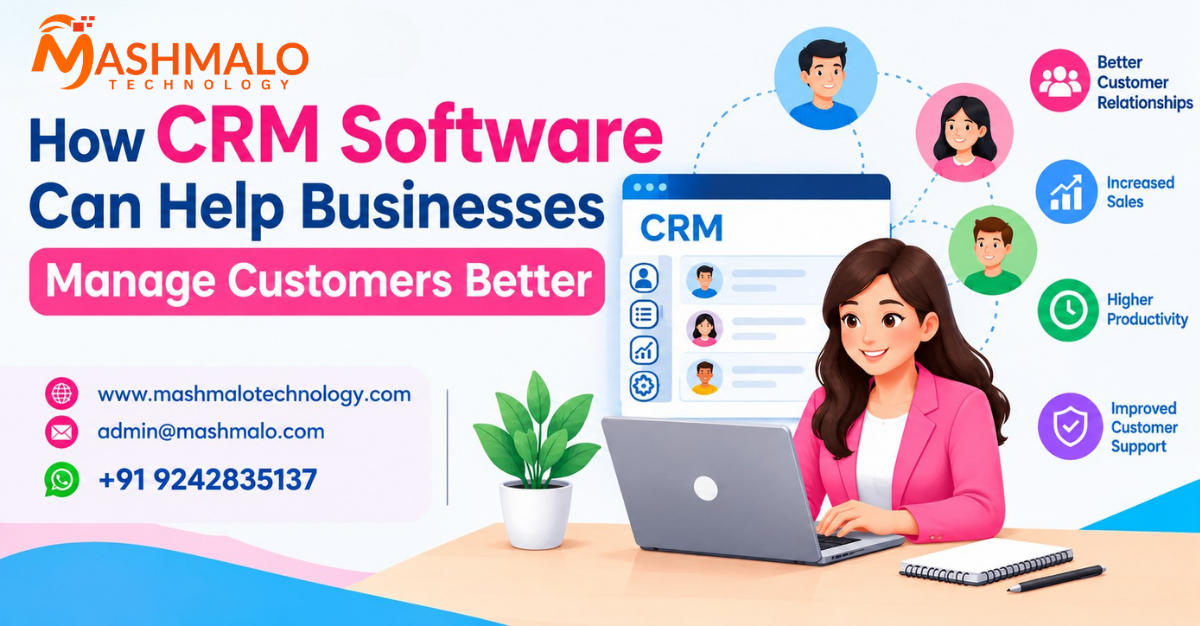
Customer Relationship Management (CRM) software helps businesses organize customer information, manage leads, track sales activities, and maintain better communication with customers. It provides a centralized system that makes customer management easier, faster, and more organized.
1. Keep All Customer Information in One Place
One of the biggest benefits of CRM software is centralized customer data management. Businesses can store customer names, contact details, purchase history, previous conversations, and important notes in one system.
Instead of searching through multiple spreadsheets, emails, or WhatsApp conversations, employees can quickly access the information they need. This helps teams understand customer requirements and provide more relevant services.
2. Manage Leads and Follow-Ups Effectively
Generating leads is only the first step toward increasing sales. Businesses must also follow up with potential customers at the right time.
CRM software helps track every lead from the first inquiry to the final sale. Teams can schedule follow-up reminders, update lead status, and identify which prospects require attention.
For example, a company receiving inquiries through its website, social media, and WhatsApp can use a CRM system to organize those leads and reduce the chances of missing potential customers.
3. Improve Customer Communication
Good communication helps build trust and long-term relationships. CRM software gives employees access to previous conversations, customer preferences, and service history, allowing them to respond with better context.
Businesses can use this information to send relevant updates, follow up on inquiries, and provide personalized support. When customers receive timely and helpful responses, their overall experience can improve.
4. Increase Sales Team Productivity
Without an organized system, sales employees may spend too much time updating records, searching for contact details, and remembering follow-up dates.
CRM software automates or simplifies many routine tasks. Depending on the platform, businesses can automate reminders, assign leads to team members, update sales stages, and generate reports.
This allows sales teams to spend more time building relationships, understanding customer needs, and closing deals.
5. Track Sales Performance and Business Growth
CRM software provides reports and dashboards that help businesses understand their sales activities. Managers can monitor the number of leads, conversion rates, pending follow-ups, and overall sales performance.
These insights help business owners identify areas that need improvement and make better decisions based on available data.
For growing businesses, this visibility can make it easier to plan sales strategies and measure progress toward business goals.
6. Strengthen Customer Retention
Finding new customers is important, but retaining existing customers is equally valuable. CRM software helps businesses maintain customer records, track previous purchases, and plan follow-ups after a sale.
Businesses can use these details to provide after-sales support, share relevant offers, and remind customers about services they may need again. Consistent service and personalized attention can encourage repeat purchases and stronger customer loyalty.
7. Choose the Right CRM for Your Business
Every business has different requirements. A small business may need basic contact management and follow-up reminders, while a larger organization may require sales automation, detailed reporting, team permissions, and integrations with other business tools.
Before choosing a CRM, consider your budget, business size, required features, ease of use, and data security. The best CRM is one that fits your workflow and can grow alongside your business.
Conclusion
CRM software can transform the way businesses manage customers by organizing information, improving follow-ups, streamlining sales activities, and supporting stronger customer relationships. It helps businesses reduce manual work, identify sales opportunities, and deliver a more consistent customer experience.
If you want to manage leads more efficiently and grow your business digitally, investing in the right CRM solution can be a valuable step toward long-term growth.