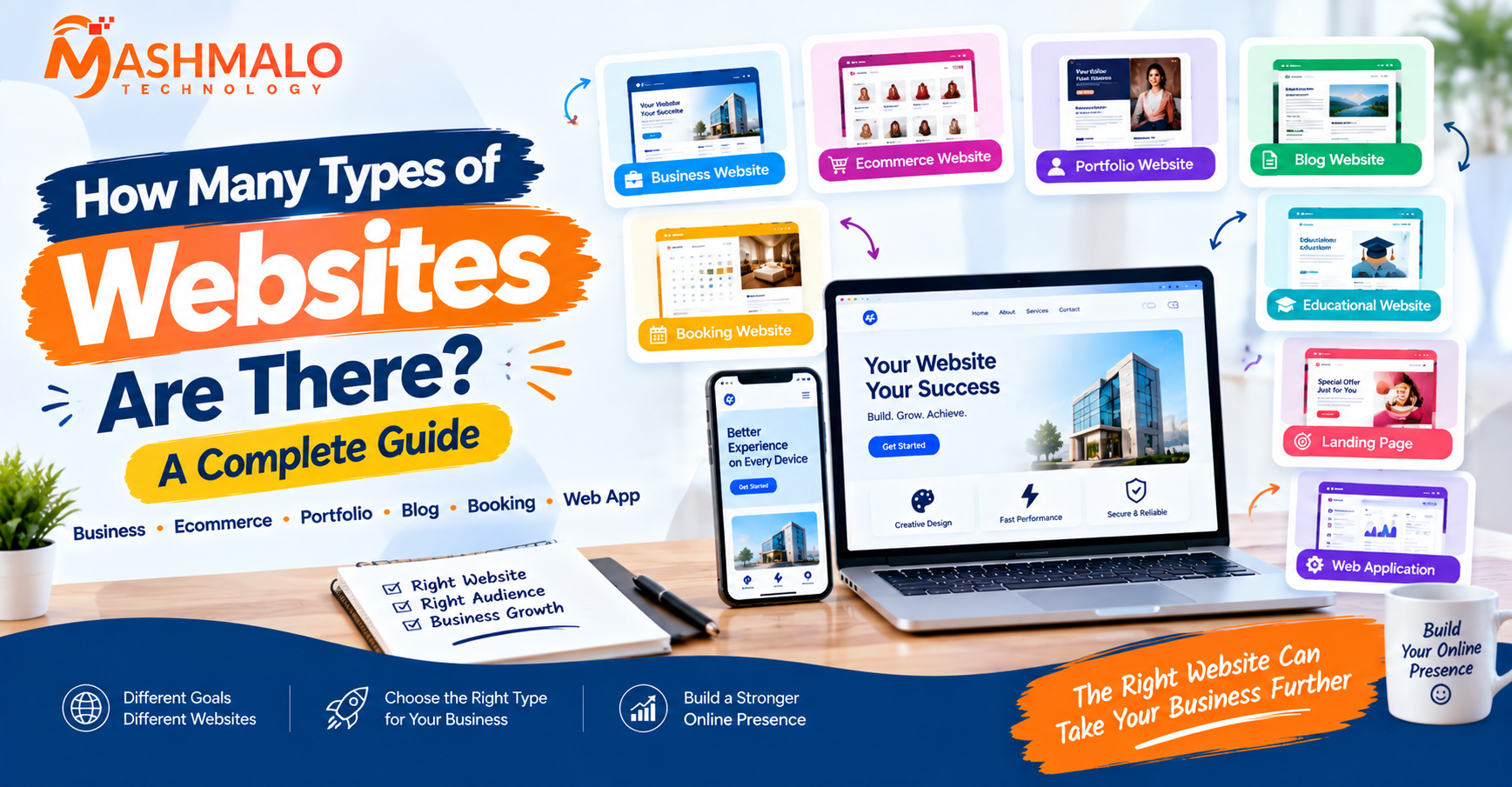
How Many Types of Websites Are There? A Complete Guide
How Many Types of Websites Are There?
A website is an important part of having an online presence. But not every website is created for the same purpose. A small business may need a simple business website, while an online store may require an ecommerce website with products, payments, and order management.
Understanding the different types of websites can help you choose the right solution for your business, organization, or personal project.
Here are some of the most common types of websites.
1. Business Website
A business website introduces a company and its products or services to potential customers.
It usually includes pages such as Home, About Us, Services, Products, Testimonials, and Contact.
Best for: Small businesses, service providers, agencies, local businesses, and startups.
2. Ecommerce Website
An ecommerce website allows businesses to sell products or services online.
It can include product listings, categories, shopping carts, online payments, order management, customer accounts, and delivery information.
Best for: Clothing stores, jewellery businesses, electronics stores, grocery businesses, furniture shops, and online brands.
3. Portfolio Website
A portfolio website is designed to showcase someone's work, skills, projects, or achievements.
Photographers, designers, developers, architects, writers, artists, and freelancers can use portfolio websites to demonstrate their work to potential clients.
Best for: Freelancers, creative professionals, designers, photographers, and developers.
4. Blog Website
A blog website focuses mainly on publishing articles, guides, news, opinions, or educational content.
Businesses can also use blogs to share useful information and support their content marketing and SEO strategies.
Best for: Bloggers, businesses, educators, writers, and content creators.
5. Landing Page
A landing page is a focused webpage designed around a specific goal, such as generating leads, promoting a product, collecting enquiries, or encouraging users to register.
Unlike a large website, a landing page usually focuses on one particular offer or action.
Best for: Marketing campaigns, Google Ads, Meta Ads, product promotions, and lead generation.
6. Educational Website
Educational websites provide learning resources, courses, study materials, classes, or educational services.
Some platforms also include student accounts, online tests, video lessons, payment systems, and progress tracking.
Best for: Schools, colleges, coaching centres, tutors, online courses, and educational institutions.
7. Booking Website
A booking website allows customers to schedule appointments, reservations, or services online.
It can include calendars, available time slots, customer information, payment options, and booking confirmations.
Best for: Salons, hotels, doctors, consultants, restaurants, travel companies, and service businesses.
8. News and Magazine Website
News websites publish current events, articles, reports, interviews, and other information.
These websites often contain multiple categories and are regularly updated with new content.
Best for: News organizations, magazines, media companies, and publishers.
9. Membership Website
A membership website provides restricted content or services to registered users.
Users may need to create an account or purchase a membership plan to access specific content, courses, communities, or resources.
Best for: Online communities, premium content platforms, professional organizations, and subscription-based businesses.
10. Web Application
A web application is more interactive than a traditional informational website. Users can log in and perform specific activities directly through the browser.
Examples include CRM systems, project management platforms, online dashboards, customer portals, and SaaS applications.
Best for: Startups, SaaS companies, enterprises, and businesses requiring custom digital solutions.
How Do You Choose the Right Website?
The right website depends on your business goals and customer requirements.
Ask yourself:
- What is the main purpose of my website?
- Do I need to sell products online?
- Do customers need online booking?
- Do I need customer accounts?
- Do I want to generate leads?
- Will I regularly publish content?
- Do I need a custom web application?
For example, a local salon may need a business + booking website, while an online clothing brand may need an ecommerce website.
Conclusion
There are many types of websites, and each one serves a different purpose. The most common types include business websites, ecommerce websites, portfolio websites, blogs, landing pages, educational websites, booking websites, news websites, membership websites, and web applications.
Choosing the right type depends on your business model, target audience, features, budget, and future growth plans. A well-planned website can help you build an online presence and make it easier for customers to discover and connect with your business.