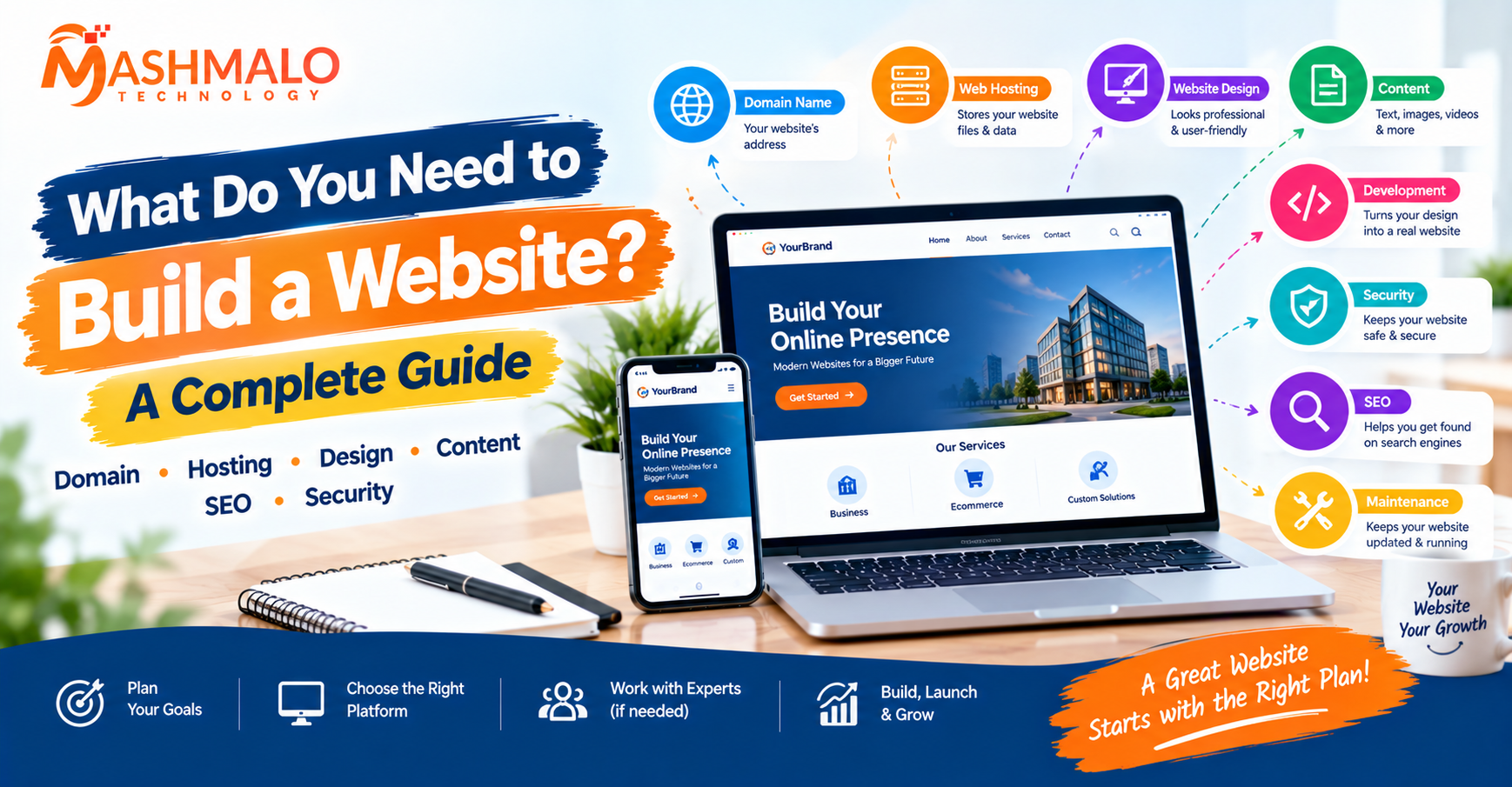
What Do You Need to Build a Website? A Complete Guide
What Do You Need to Build a Website?
A website can help a business establish an online presence, showcase products or services, generate enquiries, and connect with customers. But if you are planning to build a website for the first time, you may wonder: What exactly do I need?
From choosing a domain name to designing pages and making the website live, several important elements are involved.
Here is a simple guide to the things you need to build a professional website.
1. A Domain Name
A domain name is your website's address on the internet, such as yourbusiness.com.
Your domain should ideally be:
- Easy to remember
- Simple to spell
- Related to your business
- Short and professional
For example, a clothing business might choose a domain related to its brand name rather than using a complicated web address.
2. Web Hosting
Web hosting is where your website's files and data are stored so people can access your website online.
When choosing hosting, consider factors such as:
- Website speed
- Storage
- Reliability
- Security
- Technical support
- Scalability
A small business website may have different hosting requirements from a large ecommerce website or web application.
3. Website Design
Your website needs a professional and user-friendly design.
A good design should make it easy for visitors to understand:
Who you are → What you offer → Why they should choose you → How they can contact you
The website should also be responsive, meaning it should work properly on smartphones, tablets, laptops, and desktop computers.
4. Website Content
Content is one of the most important parts of a website.
Depending on your website type, you may need:
- Business information
- Service descriptions
- Product information
- About Us content
- Contact details
- FAQs
- Testimonials
- Blog articles
- Images and videos
Good content helps visitors understand your business and can also support search engine optimization.
5. Images and Branding
Professional images can make a website more attractive and easier to understand.
You may need:
- Business logo
- Product photos
- Service images
- Team photos
- Banners
- Icons
- Brand colours
- Brand fonts
Consistent branding can help customers recognize your business across your website and social media channels.
6. Website Development
After planning the design and content, the website needs to be developed.
Depending on your requirements, you might build a website using a CMS such as WordPress, an ecommerce platform, or a custom development approach.
The development process can include:
- Frontend development
- Backend development
- Database setup
- Forms
- Payment integration
- Login systems
- Booking systems
- Ecommerce functionality
The right technology depends on the website's purpose and required features.
7. Security
Website security should be considered from the beginning.
Depending on the website, security measures can include an SSL certificate (HTTPS), secure passwords, software updates, backups, access controls, and appropriate security tools.
For ecommerce and websites handling customer information, security becomes especially important.
8. SEO
Search Engine Optimization (SEO) helps search engines understand your website and can support its visibility in relevant search results.
Basic SEO can include:
- SEO-friendly page titles
- Meta descriptions
- Relevant keywords
- Useful content
- Proper headings
- Image optimization
- Mobile-friendly design
- Fast-loading pages
- Internal linking
SEO is an ongoing process rather than a one-time setup.
9. Testing
Before launching a website, it should be tested on different devices and browsers.
Check whether:
- Pages load correctly
- Links work
- Forms submit properly
- Images display correctly
- Mobile layouts work
- Buttons function properly
- Checkout or payment systems work, if applicable
Testing can help identify problems before customers encounter them.
10. Maintenance and Updates
A website needs ongoing attention after launch.
Regular maintenance may include security updates, backups, content changes, product updates, performance improvements, and technical support.
For businesses, keeping website information accurate and up to date is also important.
Conclusion
Building a website involves several important components, including a domain name, hosting, design, content, images, development, security, SEO, testing, and maintenance.
The exact requirements depend on what you want your website to achieve. A simple business website may need only essential pages and enquiry features, while an ecommerce store or custom web application may require much more advanced functionality.
Planning these requirements before development can help you build a website that is professional, useful for customers, and ready to support your business as it grows.